
7 Non-Negotiable Preschool Routines for a Successful Classroom


Those First Day Nerves...
When I first started teaching as the literacy teacher at a local preschool, I was getting all the details about the beginning of the year. I asked what time I should arrive, and my director told me, “We meet at 8:30am every morning for devotion.”
I’m not going to lie—this intimidated me. I was already nervous about starting a new school and stepping into a brand-new position, and now I was expected to gather with (and maybe even share in front of) a group of people I hardly knew. My nerves were running high.
That first day, I showed up feeling uneasy. Thankfully, everyone was so welcoming and pleasant. I quickly realized my role was simply to listen and take it all in. The other teachers knew the drill...there was a clear routine and a calendar for who would share, which calmed my biggest fear—that I’d be put on the spot.
By the end of that first week, I was still a little anxious walking in, but over time I grew to absolutely love those morning reflections. They became a time to connect personally and emotionally, and to truly support one another.
I imagine the feelings I had in those early days are very similar to what children experience in the first few weeks of school—new faces, new routines, and the anxiety of leaving their families behind. What eased my fears most was the predictability of it all—the clear plan, the repetition, the comfort of knowing what to expect. And that’s exactly what helps children, too.
As we step into these first weeks of school, let’s not forget the importance of repetition, a clear plan, and predictable preschool routines. The brain craves repetition, and that applies to both academics and behavior. Today, we are going to dive into a few simple ways you can embrace predictability and routine for a smoother, more successful transition with your preschool students.
The "Let's Do It Again" Strategy for Preschool Success

When children step into a new classroom, the unknowns can feel overwhelming. Routines are what anchor them. A predictable flow lowers anxiety, builds confidence, and makes space for actual learning. But it’s not just about having routines—it’s about repeating them with consistency until they become second nature.
Here are seven non-negotiable routines that do the heavy lifting in the beginning of the year!
1. Arrival Plan
Create a clear, predictable flow for when children arrive. How do we sign in? Where do we put our folders? How do we hang our backpacks? Where do we go next? How do we say goodbye to parents?
Why this matters: When children know what to do and how to do it, they feel confident and calm.
Pro Tip: Preview routines the day before. If you plan to have a new center or table activity out, let children know in advance. This builds predictability, sets expectations, and creates excitement for the next day.
2. Daily Schedule Review
Use visual calendar cards displayed in a pocket chart to share each and every step of the day. Review the schedule every single day, taking extra time to highlight when the things are out of the ordinary.
Why this matters: Knowing what is to come takes away anxiety for many children. If there’s a change, it helps prepare them early in the day.
Pro Tip: Put the same cards on a key ring and carry them with you. This portable visual support can really help children who struggle with transitions.
3.Circle Time Consistency
Start circle time the same way each day. Use a greeting choice board, a consistent song, or a simple name ritual as children join the carpet. Once gathered, add quick community-building moments that celebrate SEL and names!
Why this matters: Predictable circle routines help children feel safe, connected, and ready to learn together. Creating strong expectations during this time will set you up for a successful year of learning.
Pro Tips:
Begin with the same song each day at the beginning of the year. I love Open, Shut Them by Super Simple Songs for the littles and Little Hands by Jack Hartmann for the older children.
Offer a greeting-choice board for fun, predictable hellos. Write fun ideas on popsicle sticks (high five, hug, mirror me, cowboy hello, etc.). Ask a helper to grab a stick and everyone says hello!
Check out the video below for more tips!
4. Consistent Clean-Up and Transitions
Use the same clean-up song, lining-up chant, or clapping pattern every day at the beginning of the year. This keeps the day consistent and expectations clear.
Why this matters: Consistency strengthens self-regulation. When children know exactly how to move from play to clean-up, stress and power struggles decrease.
Pro Tip: Don’t switch songs weekly. Stick with one until children anticipate the routine so strongly they begin moving before you even prompt.
5. Using Consistent Language for Expectations
Choose one short, positive phrase for each expectation, such as “Walking feet,” “Gentle hands,” or “Quiet voices”, and use it every time. Encourage your teaching partners to do the same.
Why this matters: For children, “Quiet feet,” “No stomping,” and “Walk softly” don’t feel the same. Inconsistent wording creates confusion. Consistent language works like a code: when they hear it, they know exactly what to do.
Pro Tip: Post your chosen phrases on a chart so every teacher and assistant uses the same words. Over time, the repetition makes expectations automatic.
6. Community Building Routines
Carve out time each day to build social and emotional learning. This might be a short circle where everyone shares a compliment or a glow for the day. It could also be a time to review issues you see in centers or on the playground.
Why this matters: Children are more likely to take risks in learning when they feel part of a safe, supportive community. Building trust early sets the tone for the entire year, and addressing problems together lets children know we have each other’s backs.
Pro Tip: Try a “compliment stick.” Pass it around the circle and encourage each child to give a genuine compliment. This builds kindness, empathy, and speaking with purpose.
7. Consistent Literacy Practices
Of course, we could not leave this one out! Literacy sticks when we embrace repetition and explicit instruction in fun and engaging ways. That’s why we re-read the same book multiple times a week, use letter cycles, and learn the same skills again and again while adding games and movement along the way.
Why this matters: Repetition builds connections in the brain and boosts confidence. The more often children hear, see, and practice the same skills, the stronger those connections become—and the more excited they are to show what they know.
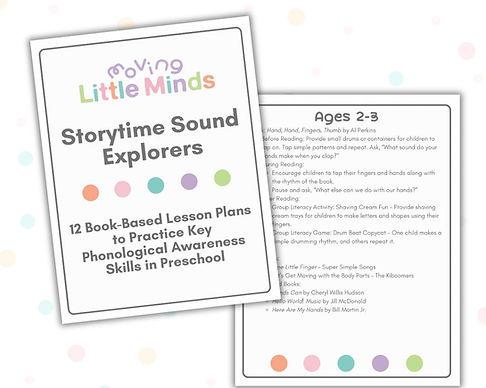
Pro Tip: Use our curriculum and take the guesswork out of it all! Check them out below!
Grab Your Free Checklist!

Share your plan for success with your staff and teammates!
Grab the PDF version below!
Final Thoughts...
At the beginning of the year, “do it again” is more than a phrase—it’s a strategy . When we repeat routines with consistency, we’re not just managing classrooms but we’re wiring brains, building confidence, and shaping communities where children thrive.
So this month, don’t rush past repetition. Lean into it. It’s the science, and the heart, of early learning. When behavior is taught with the same intentionality as literacy, classrooms shift from chaos to calm.
Don't miss an update from Moving Little Minds! SUBSCRIBE HERE!

We believe that every child deserves a bright future, and this begins with a strong foundation in early literacy skills. At Moving Little Minds, we are dedicated to providing research-based literacy activities in fun and engaging ways! By merging instruction with play, we ensure that children are reaching their full potential and embark on their educational journey well-prepared for the
future! Let's build those KEY emergent literacy skills together.




%20(52).jpg)

Comments