
Preschool Literacy Curriculum: Everything Teachers and Directors Need to Know

Updated: Jul 6

Before You Purchase a Preschool Literacy Curriculum, Read This!
Choosing a preschool literacy curriculum, or any curriculum can feel overwhelming. Some programs are heavily worksheet-driven and overly academic. Others seem to lack structure and rely completely on play.
At Moving Little Minds, we believe children deserve both. Young children need:
explicit, research-based instruction
meaningful repetition
movement and engagement
multisensory experiences
playful learning experiences
developmentally appropriate teaching
and FUN!
That belief, along with our deep desire to change the trajectory or literacy in this country, is exactly why we created our curriculum.
Before purchasing a preschool literacy curriculum, here are some of the most common questions teachers and directors ask us about the Moving Little Minds Preschool Literacy Curriculum.
1. Does This Preschool Literacy Curriculum Replace Play?
No, this preschool literacy curriculum is designed to support play-based learning, not replace it. The curriculum combines explicit literacy instruction with movement, games, songs, and hands-on learning experiences.

Our curriculum includes short, intentional instructional moments followed by playful opportunities to practice and apply skills. This helps children stay engaged while still building the repetition and explicit instruction needed for strong literacy development.
2. Is This Preschool Literacy Curriculum Aligned with the Science of Reading?
Yes, our preschool literacy curriculum is grounded in research-based early literacy practices and focuses heavily on foundational skills that support later reading success. Every part of what we do has been carefully designed to follow best literacy practices.
This includes:
phonological awareness - read more here!
alphabetic knowledge
phonics
oral language
concepts of print
vocabulary
writing development
text comprehension
We also believe that developmentally appropriate practice matters. Young children do not need long lessons, worksheets all day, or constant drilling. They need intentional, repeated exposure through engaging instruction and play, and this belief is directly reflected in our curriculum lessons.
Learn more about the science of reading in our blog post here.
3.We already have a preschool curriculum. Do we still need this?
Absolutely! Moving Little Minds is designed to complement your existing curriculum, not replace it.
Most preschool curricula do a wonderful job providing engaging themes, books, art projects, centers, and hands-on learning experiences. What many don't provide is a clear, intentional plan for teaching the foundational literacy skills children need before they learn to read.
Our curriculum fits seamlessly into your literacy block, providing short, playful lessons that explicitly teach skills like alphabetic knowledge, phonological awareness, concepts of print, and early writing. These are skills that benefit from intentional instruction and repeated practice—not just exposure through play.
Think of it this way: your curriculum teaches the theme, while Moving Little Minds teaches the literacy skills. Together, they create a balanced, research-based approach that prepares children for future reading success.
4. Do children learn one letter per week in this preschool literacy curriculum?

No, and this is one of the biggest differences in our approach. Our preschool literacy curriculum
uses letter cycles rather than the traditional “letter of the week” model. Research shows children benefit from repeated exposure to many letters over time instead of spending an entire week focused on only one.
With letter cycles, children:
revisit letters often
build stronger recall
compare letter features
strengthen memory through repetition
stay engaged through varied exposure
This approach also removes pressure from teachers and allows children to encounter letters
naturally throughout the classroom environment. If you want to learn more about the Letter Cycle Framework, check it out here!
5. How is alphabet instruction different in the 2s, 3s, and 4s preschool literacy curriculum?
In our 2s curriculum, the focus is on playful exposure and meaningful interaction with print rather than formal mastery. Children are introduced to letters through songs, student names, movement, books, multisensory activities, and everyday classroom experiences. At this stage, the goal is to build familiarity, excitement, and awareness around letters in a developmentally appropriate way.
In the 3s curriculum, we begin implementing modified letter cycles designed to fit a 3-day instructional schedule. Children revisit letters consistently while still keeping instruction playful and engaging. By Cycle 3, instruction slows slightly to allow for deeper review and practice. Children focus on one featured letter across 3 instructional days, followed by an optional 2-letter review on Days 4 and 5 to strengthen retention and recall.

In the 4s curriculum, we follow the full 4-cycle letter approach. The year begins with playful exposure and name exploration, then gradually progresses into more intentional alphabet instruction (read more here) through one letter per day, two letters per week, assessment and review cycles, and repeated exposure across the school year. Rather than spending an entire week on a single letter, children revisit letters consistently through movement, games, review, and structured literacy experiences designed to strengthen letter recognition, letter-sound knowledge, and retention over time.
6. Is this preschool literacy curriculum too academic for preschool?
Not at all! One of the biggest misconceptions in early literacy is that intentional instruction means sitting children at tables for long periods of time. That is not what preschool literacy should look like. We embrace playful learning!
Everything that we do is:
interactive
movement-based
hands-on
playful
engaging
short and realistic for preschool attention spans
Children learn through active participation!
7. Will this preschool literacy curriculum work in a play-based classroom?
Yes. In fact, many of the schools and teachers we work with use play-based models.
At Moving Little Minds, we believe play exists on a spectrum. Children benefit from all types of play, from free play to intentional, playful instruction. We believe there is room for all types of play throughout the preschool day, and the curriculum reflects that.
The goal is not to remove play from preschool. The goal is to make literacy learning more intentional while still keeping it engaging, developmentally appropriate, and playful. Many of the activities within the curriculum feel like games to children while still providing the repeated exposure and intentional instruction needed to build strong early literacy foundations.
8. What does a typical lesson in this preschool literacy curriculum actually look like?
Each curriculum level follows a predictable routine, so children build confidence through repetition while still staying engaged.
A typical lesson may include:
phonological awareness warm-ups
movement songs and body motions
letter formation practice
fine motor or multisensory activities
alphabet games and review
pre-reading or vocabulary activities
The structure and pacing vary slightly by age level. Most activities are intentionally brief (often just 1–5 minutes each) to match young children’s developmental attention spans while increasing opportunities for repeated practice throughout the day.
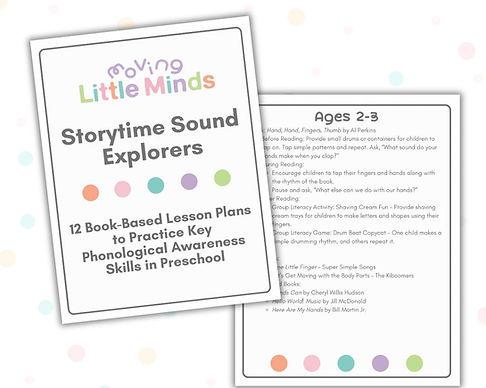
Check out sample lesson plans HERE!
9. Do teachers need special training to use this preschool literacy curriculum?
No, the curriculum was intentionally designed to be practical, teacher-friendly, and easy to implement in real classrooms.
Each lesson includes clear directions, simple routines, and structured activities that make it easy for teachers to follow, even if they are newer to research-based literacy instruction.
In addition, every curriculum purchase includes access to a self-paced training course that walks teachers through exactly how to use the curriculum, understand the lesson structure and materials, and implement the strategies with confidence.
For schools looking for additional support with implementation, we offer the Literacy Success School Bundle, which includes onboarding for your entire staff and support throughout the year.

10. Do I have to complete the entire lesson in one sitting?
No, the curriculum is intentionally designed to be flexible and developmentally appropriate for young children.
Lessons are broken into short activities that typically last between 1–5 minutes each. Teachers can complete the lesson in one literacy block or spread activities throughout the day depending on their classroom schedule, children’s attention spans, and teaching style.
11. If I don’t have enough time, what should I prioritize from the lesson?
If time is limited, we recommend always prioritizing:
alphabet introduction/review
In the 3s and 4s curriculum, we also strongly recommend keeping the daily alphabet song and movement routine, as repetition and consistent exposure are key parts of the learning process.
While all components of the lesson are intentionally designed to support literacy development, these core pieces provide the strongest foundation for building early reading skills.
Additional activities such as extension games, fine motor practice, handwriting, and enrichment activities can be shortened, rotated, moved into centers or small groups, or revisited later in the day as needed.
12. How much prep does this preschool literacy curriculum require?
Teachers are busy, and we know prep time matters. Our goal was to create a curriculum that feels realistic for actual preschool classrooms while still providing intentional, high-quality literacy instruction.
When you purchase the curriculum, you will receive access to an onboarding course where all lesson plans, printable materials, and supporting resources can be downloaded and organized easily. We are also continually adding additional downloadable resources to make implementation even simpler for teachers.
In addition, you will receive a physical materials box in the mail with several of the core literacy materials used throughout the curriculum.
Like most preschool curricula, some preparation is still required. Teachers will need to:
print and organize materials
prepare activities
cut and laminated on occasion for future use
gather some common classroom items such as playdough, sensory materials, manipulatives, or items for letter hunts and games
However, we work hard to make this process as clear and manageable as possible. Each lesson includes clearly listed materials, step-by-step directions and organized lesson plans.

13. What makes this preschool literacy curriculum different from others?
At the heart of everything we do is one belief: children deserve literacy instruction that is both fun and effective.
Our curriculum was intentionally designed to merge research-based instruction with playful learning in a way that feels developmentally appropriate for preschool classrooms. Rather than relying on isolated worksheets or one-time exposure, we focus on repetition, movement, explicit teaching, meaningful interaction, and playful practice woven throughout the day.
We are not trying to remove play from preschool. In fact, we believe children learn best when play and instruction work together.
Many preschool classrooms already do an incredible job creating engaging, nurturing environments. Our goal is to help teachers make literacy learning more intentional within those environments while still keeping childhood at the center.
Through repeated exposure, movement, games, and intentional literacy experiences, children build stronger foundations for future reading success without sacrificing the joy and engagement that belong in early childhood classrooms.
Finding the Right Preschool Literacy Curriculum for Your Classroom
Every preschool classroom is different, and there is no one-size-fits-all approach to early literacy instruction. Our goal is simply to provide teachers and directors with practical, research-based tools that make literacy instruction more intentional, engaging, and manageable within real preschool classrooms.

Whether you are looking for a complete literacy curriculum, additional support for your current program, or professional development for your staff, we hope this guide helped answer some of your biggest questions about the Moving Little Minds Preschool Literacy Curriculum.
If you would like to learn more about implementation, curriculum levels, or school support options, we would love to connect with you.
Don't miss an update from Moving Little Minds! SUBSCRIBE HERE!

We believe that every child deserves a bright future, and this begins with a strong foundation in early literacy skills. At Moving Little Minds, we are dedicated to providing research-based literacy activities in fun and engaging ways! By merging instruction with play, we ensure that children are reaching their full potential and embark on the educational journey well-prepared for the future! Let's build those KEY emergent literacy skills together.


%20(52).jpg)

Comments